
iDempiere: An Overview of the ERP System for Business

Choosing an Enterprise Resource Planning (ERP) system today can be a daunting task. On one side, you have giants like SAP or Oracle: they promise everything at once, but their cost can become a financial burden even for a successful company. On the other side are more approachable, nominally free solutions that initially lure users in with beautiful interfaces and long trial periods. However, over time, they begin charging for every additional module as soon as your business grows.
In their shadow, iDempiere is often overlooked—a system that isn’t talked about as frequently, but possesses the power of Enterprise-grade solutions while remaining completely open-source. Let’s explore why this software deserves close attention and why it might be the best strategic decision for your company.
The Evolution of the Code
iDempiere is the result of twenty years of code evolution. Its history began back in 1999 with Compiere, a pioneer in open-source ERP. Later, due to disagreements regarding the owners’ commercial policies, the developer community created a fork called ADempiere. In 2011, seeking architectural perfection, a group of leading engineers rewrote the system’s core, giving life to the iDempiere project.
The Technical Foundation of iDempiere
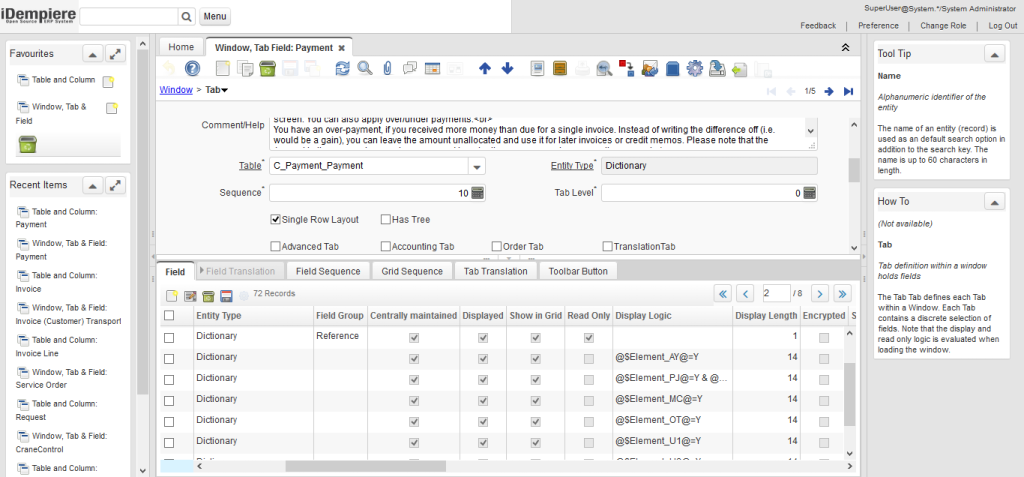
Image4
If you ask a technical specialist what sets iDempiere apart, they will likely point to two terms: OSGi and the Active Data Dictionary.
- OSGi Technology: This turns the system into a set of independent modules. Imagine you are building a house. In traditional systems, to change the wiring, you often have to tear down walls. In iDempiere, you can update, add, or remove modules (e.g., localization for a new country or a specific warehouse report) without stopping the entire company’s operations or risking core system stability. This provides immense flexibility and simplifies maintenance.
- Active Data Dictionary: This is iDempiere’s true “superpower.” In most software, to add a new field to a document, a programmer must write code, compile it, and update the interface. In iDempiere, you simply go to the admin settings and create a column in the database; the system then renders it on the screen and adds it to search forms and reports automatically.
This allows the system to adapt to changing business processes at incredible speed, sometimes even without involving developers.
Capabilities and Scale
Calling iDempiere an industrial-grade system is no exaggeration. It was designed from the ground up for the global market. Whether you run a holding company with branches in Brazil, Germany, and China, iDempiere handles it seamlessly. It supports multi-currency, multi-language, and multi-organization setups within a single installation.
Core features include:
- Sales and Procurement: A full cycle that tracks deals from the initial quote to shipment and payment.
- Warehouse Management: Inventory control, material requirements planning (MRP), and audits.
- Finance: Consolidates all transactions into a single view, enabling management accounting of any complexity.
- Reliable Tech Stack: It runs on Java and the PostgreSQL database, ensuring stability even with millions of transactions.
Comparing the Competition
- iDempiere vs. Odoo: This Belgian system wins on modern, intuitive design and a quick start. however, once you need deep customization or complex modules, you face aggressive monetization and update difficulties. iDempiere may lose to Odoo in “out-of-the-box” aesthetics, but it wins in total freedom of action and the absence of licensing fees over the long term.
- iDempiere vs. SAP: iDempiere is like a younger, more agile brother. It offers similar architectural flexibility but requires investment in an implementation team rather than licenses. For many companies, this is a more transparent and controlled expenditure model.
Who iDempiere is NOT for
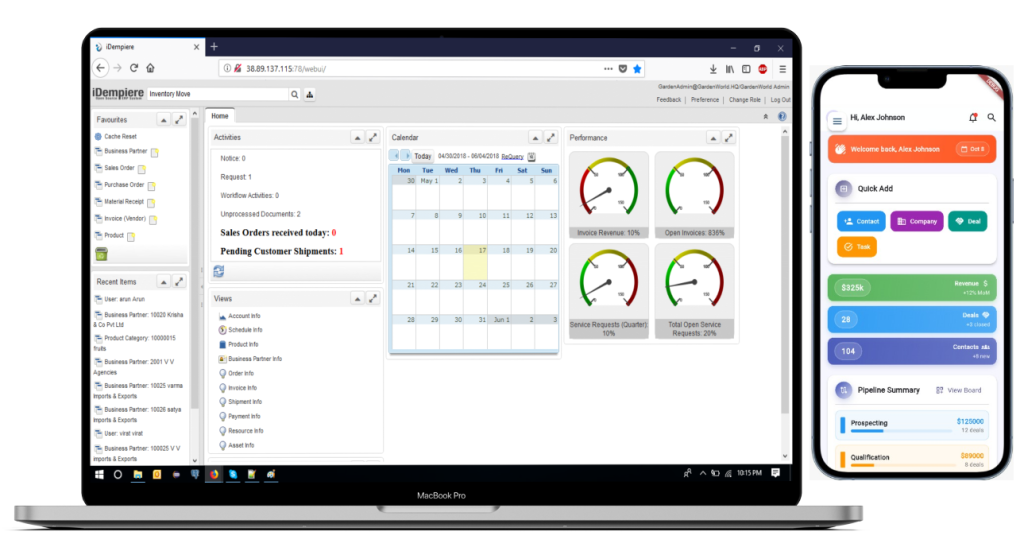
Image3
To be fair, iDempiere has specific characteristics that might be a deterrent:
- High Barrier to Entry: This is not a “plug-and-play” program. Implementing iDempiere is a project that requires time, deep analysis, and qualified specialists.
- The Interface: To many, it may seem overly utilitarian or even old-fashioned.
- Specialist Scarcity: While the community is active, it is smaller than that of 1C or popular PHP frameworks. You will likely need to develop in-house expertise or find a specialized integration partner.
Conclusion: Who Should Choose iDempiere?
The ideal owner of this system is a medium-to-large business that has outgrown standard “boxed” solutions. Such companies usually have complex, unique processes that serve as their competitive advantage, and they don’t want to break those processes to fit the logic of off-the-shelf software.
iDempiere is the choice for those who value independence. If you have a strong IT department (or the willingness to build one) and want to own your system 100%, iDempiere will serve as a reliable foundation for your business for years to come.
Speaking of reliability: the potential of iDempiere is fully realized only on high-quality hardware. In this context, UFO.Hosting servers are an excellent choice for hosting the system. This is a high-performance platform that provides the very hardware stability required for heavy Java applications and loaded PostgreSQL databases.
Related
All articles
What Snapshots Are and How They Differ from Backups
Snapshots and backups are two terms that, in conversations about servers and data storage, often get blurred into one. In reality, the difference between them is like the difference between saving a video game and evacuating valuables to a bunker.…
What Is SFTP and How Does It Differ from Regular FTP
File transfer can, without exaggeration, be called one of the oldest operations on the internet — something nearly as ancient as the internet itself. Every day we copy gigabytes of data from server to server and rarely stop to think…